What Is a Frameless Cabinet? A Complete Guide to Full-Access Design
If you are planning a kitchen renovation, you may be wondering, what is a frameless cabinet, and how is it different from the cabinetry commonly found in American homes? A frameless cabinet is built without the front supporting frame used in traditional cabinet construction. Instead, the doors and drawers attach directly to the cabinet box, creating clean lines, wider openings, and easier access to the interior.
This construction method is often called European frameless cabinetry because it became widely used in European kitchens, where efficient storage and streamlined design have long been priorities. Today, it is equally at home in modern, transitional, and carefully designed traditional spaces.
Quick Overview
- Frameless cabinets eliminate the front face frame entirely.
- Doors and hinges attach directly to the sides of the cabinet box.
- Wider cabinet openings make stored items easier to reach.
- Larger drawers and pull-outs can help maximize storage space.
- Precise construction and professional installation are especially important.
- Frameless cabinetry can support modern, transitional, and traditional designs.
What Is a Frameless Cabinet and How Is It Built?
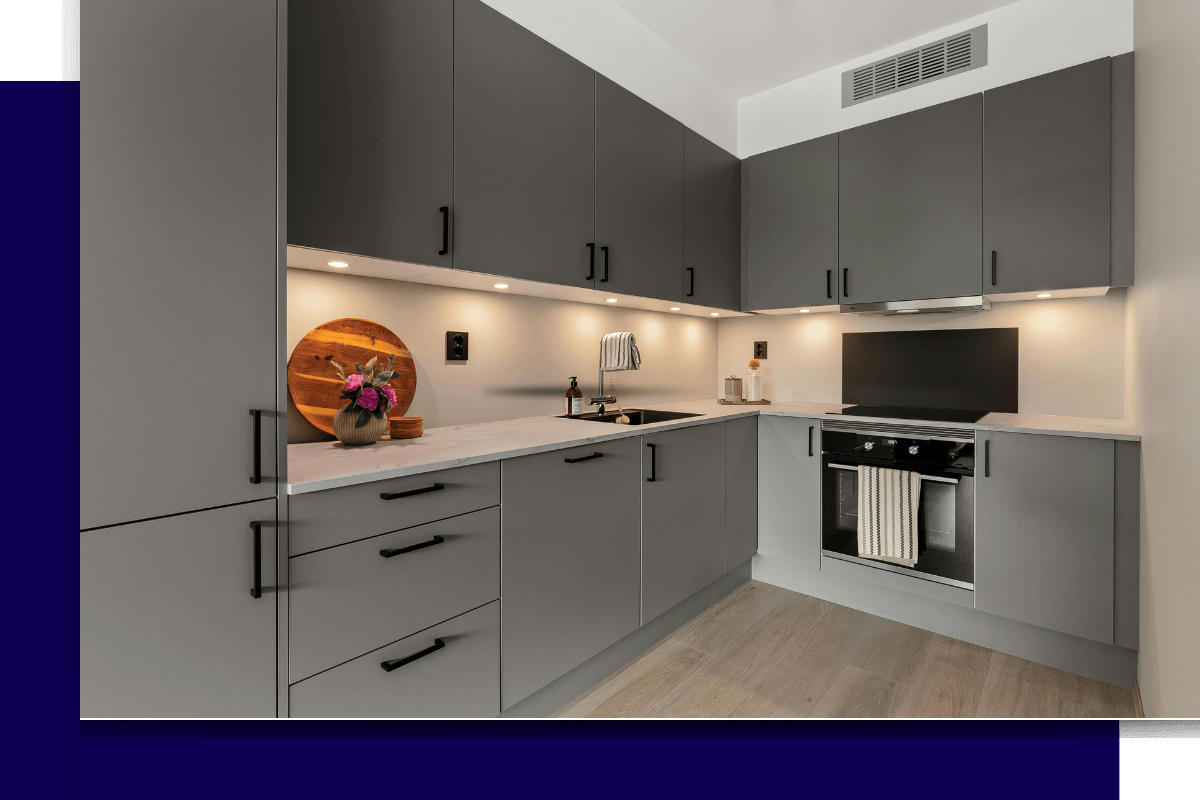
A frameless cabinet is a modern construction style that does not include a separate wooden frame across the front of the cabinet box. The box itself provides the structure, while concealed hinges are attached directly to its interior side panels.
The front edges of the box are finished with edge banding or another coordinating material. When the cabinet doors and drawer fronts are closed, they cover nearly the entire front surface. This creates the narrow, consistent spacing associated with full-overlay European cabinetry.
The cabinet box carries the structure
In framed cabinetry, rails and vertical stiles form a front framework that helps support the box and provides a place for hinges to be attached. Frameless construction uses engineered box strength instead.
That makes the quality of the materials, joints, fasteners, back panel, and installation especially important. A well-made box must remain square so the doors and drawers continue to align correctly.
The hinges attach directly to the sides
Most frameless cabinets use concealed European-style hinges. One part of the hinge connects to the door, while the mounting plate is secured directly to the cabinet side.
These hinges usually provide several directions of adjustment. An installer can fine-tune the door height, depth, and side-to-side position to create even reveals between adjacent doors.
The doors create the finished front
Because there is no visible framework, the doors and drawer fronts become the face of the cabinetry. Slab doors produce an especially clean contemporary look, but they are not the only option.
Shaker, narrow-rail, textured, painted, wood veneer, and other door profiles can also be used. The construction may be European frameless, while the finished design feels warm, transitional, organic, or traditional.
Frameless Cabinets vs. Framed Cabinets
The primary difference is not simply appearance. It is how the cabinet is engineered and how that construction affects access, storage, installation, and design flexibility.
| Feature | Frameless Cabinets | Framed Cabinets |
|---|---|---|
| Front construction | No separate frame | Wooden face frame attached to the box |
| Hinge location | Attached to the box sides | Commonly attached to the frame |
| Interior access | Wider, unobstructed openings | Frame may reduce the opening |
| Door arrangement | Usually full overlay | Partial overlay, full overlay, or inset |
| Visual effect | Clean and closely aligned | Traditional or architectural |
| Installation | Requires precise alignment | Frame can help conceal small variations |
Neither option is automatically superior. The right choice depends on how the room will be used, the appearance you want, the quality of construction, and the experience of the installer.
What does the face frame do?
A face frame is a wooden structure attached to the front edges of a traditional cabinet box. It commonly includes horizontal rails and vertical stiles.
The frame can add rigidity and create architectural detail. It also supports several door configurations, including inset doors that sit within the frame. However, the frame occupies part of the opening and may make the interior slightly less accessible.
Why are frameless cabinets called full-access cabinets?
Frameless cabinets are often called full-access cabinets because there is no front frame or centre stile obstructing the opening.
Open a double-door base cabinet, and you can reach across almost the entire interior width. This is useful when storing wide cookware, countertop appliances, serving pieces, or pull-out organizers.
The Practical Benefits of Frameless Cabinetry
The clean appearance may be what first gets a homeowner’s attention, but the everyday function is often what makes frameless cabinetry valuable over time.
More usable interior space
Removing the front frame does not make the room larger, but it makes more of each cabinet opening usable. Wider drawer boxes and unobstructed doors can help maximize storage space, particularly in smaller kitchens.
Consider a narrow base cabinet beside a range. In framed construction, part of its width is occupied by the front frame. With frameless construction, a wider drawer or pull-out may fit inside the same general cabinet footprint.
The difference can appear modest in one cabinet. Across an entire kitchen, however, improved drawer width and accessibility can noticeably affect how comfortably the space functions.
Easier access to stored items
A traditional centre stile may require you to angle a large appliance or serving tray as you remove it. Eliminating that obstruction creates a more open path into the interior space.
This makes frameless cabinets especially practical for:
- Wide pots, pans, and baking dishes
- Small appliances stored below the counter
- Full-extension drawers
- Pull-out waste and recycling systems
- Roll-out shelves and pantry accessories
- Deep drawers for dishes or cookware
A clean, coordinated appearance
Closely spaced doors and drawers create continuous visual lines. That can make a compact kitchen feel calmer and less visually crowded.
The effect works particularly well with flat-panel doors, integrated appliances, handleless hardware, or understated pulls. It can also create a tailored background for natural wood, stone countertops, statement lighting, and other expressive materials.
Flexible organization
Because the cabinet openings are less obstructed, frameless cabinetry works well with internal organizers. Deep drawers, tray dividers, spice pull-outs, corner mechanisms, adjustable shelving, and pantry systems can be planned around the homeowner’s routine.
The most successful cabinet design does not simply add accessories everywhere. It identifies where items are used and gives each category a logical home.
Are There Any Disadvantages to Frameless Construction?
Frameless construction is highly functional, but it depends on accuracy. Uneven walls, weak materials, poorly assembled boxes, or careless installation can affect door alignment and long-term durability.
Installation allows less room for error
The narrow spaces between doors make inconsistencies easier to see. Cabinets must be installed level, plumb, square, and correctly fastened to one another.
This can be challenging in an older Western Washington home where floors slope slightly or walls are not perfectly straight. Fillers, finished panels, and careful scribing may be needed to create a built-in appearance without disrupting door movement.
Material and hardware quality matter
The absence of a face frame does not make a cabinet weak by definition. It does mean that the box construction must be designed to provide reliable structural support.
Important quality details include:
- Stable cabinet side material
- Strong joints and fasteners
- Securely constructed backs
- Quality concealed hinges
- Full-extension drawer hardware
- Properly supported shelves
- Accurate edge finishing
- Professional wall attachment
A low-quality cabinet can look attractive in a showroom but perform poorly after years of daily use. Construction beneath the finish matters as much as the visible door style.
Alignment may require occasional adjustment
Hinges can gradually move after repeated use, particularly on large or heavy cabinet doors. Quality adjustable hinges make minor corrections relatively straightforward.
A door that begins rubbing against another door does not necessarily indicate a structural failure. It may simply need a small hinge adjustment. Persistent or widespread movement, however, should be inspected.
Where Do Frameless Cabinets Work Best?
Frameless cabinets are strongly associated with kitchens, but their efficient construction can improve many areas of the home.
Kitchens with limited space
In a galley kitchen, condominium, accessory dwelling unit, or compact renovation, small improvements in access matter. Wider drawers and uninterrupted openings can make limited cabinetry more productive.
Open-concept kitchens
A clean cabinet front can complement an open living area without adding excessive visual detail. Full-overlay doors help the kitchen read as a coordinated architectural feature rather than a collection of individual boxes.
Bathrooms and laundry rooms
Frameless vanity drawers can make toiletries easier to organize, while full-access laundry cabinets provide practical room for cleaning products, linens, and household supplies.
Home offices and built-in storage
The construction works well for office drawers, media cabinetry, wardrobes, mudrooms, and wall-to-wall built-ins. Consistent door spacing can give large storage installations a polished, furniture-like appearance.
How to Decide Whether Frameless Cabinetry Is Right for You
Start with the way you use the space rather than choosing solely from a showroom image.
Choose frameless construction when you value:
- Broad access to cabinet interiors
- Larger drawers within available openings
- Clean and consistent door spacing
- Contemporary or streamlined design
- Integrated storage accessories
- Full-overlay doors and concealed hinges
Consider framed cabinetry when you prefer:
- Visible architectural framework
- Traditional partial-overlay doors
- True inset doors and drawers
- A distinctly furniture-inspired appearance
- Greater flexibility among door overlay styles
It is also possible to appreciate both. A home may use frameless cabinetry in a highly functional kitchen while incorporating framed or inset cabinets in a bathroom, bar, or display area.
Before making a final decision, bring in a professional cabinet designer who can evaluate the room, appliance clearances, fillers, door swings, storage priorities, and installation conditions together. Royal Cabinets designs, builds, and installs custom frameless cabinets for Western Washington homes, allowing the construction, proportions, finishes, and organization to be planned as one complete system.
Details to Review Before Ordering Frameless Cabinets
A beautiful door sample tells only part of the story. Ask to see how the complete cabinet is constructed.
Box and shelf materials
Find out what materials are used for the cabinet sides, bottoms, backs, and shelves. Ask how long shelves are supported and how exposed edges are finished.
Drawer construction
Open every display drawer. A quality drawer should move smoothly, remain stable when extended, and close consistently. Review the drawer box material, joint construction, load capacity, and runner system.
Door and drawer clearances
Make sure wide doors will not collide with nearby walls, appliance handles, trim, or adjacent cabinets. Corner layouts require especially careful planning.
Finished ends and fillers
End panels and fillers affect the final proportions of the installation. They should look intentional, not like pieces added after the main design was completed.
Long-term serviceability
Ask whether hinges, drawer runners, and accessories can be adjusted or replaced. Good cabinetry should be designed for years of use, not only for the day it is installed.
Frequently Asked Questions
Are frameless cabinets better than framed cabinets?
Frameless cabinets are better for some priorities, particularly wider access, larger drawers, and clean full-overlay design. Framed cabinets may be better for inset doors, visible architectural detail, or a more traditional appearance.
Construction quality matters more than the category alone. A carefully built cabinet of either type can offer excellent durability.
Are frameless cabinets less durable?
No. High-quality frameless cabinets can be highly durable when the box materials, joints, hardware, and installation are properly engineered.
Because there is no front frame, the box itself must provide structural stability. Weak materials or poor assembly are more concerning than the absence of a frame.
Do frameless cabinets have more storage?
Frameless cabinets generally provide more usable access and can accommodate wider drawers because a face frame does not occupy part of the opening.
The exact increase depends on the cabinet dimensions, drawer hardware, box thickness, and internal organization.
Are frameless cabinets only for modern kitchens?
No. Frameless construction describes how the cabinet box is built, not the only style it can achieve.
Slab doors create a modern result, while Shaker doors, natural wood, decorative hardware, and warm finishes can produce transitional or understated traditional designs.
Are frameless cabinets more difficult to install?
They require precise installation because the narrow spaces between doors and drawers reveal alignment differences. Every box must be level, square, securely fastened, and properly positioned.
Professional installation is particularly valuable in older homes with uneven floors or walls.
Can frameless cabinet doors be replaced?
Yes, doors can usually be replaced when the new doors are correctly sized and compatible with the existing hinge system.
Accurate measurements are essential because the door overlays and small reveals determine how the entire cabinet front aligns.
Plan Your Frameless Cabinetry with Royal Cabinets
Bring refined design, full-access storage, and enduring craftsmanship into your home. Contact Royal Cabinets to schedule a consultation for your custom frameless cabinetry project.
[PHONE]: (253) 843-7682