What Is a Shaker Cabinet?
A Practical Guide to This Timeless Kitchen Style
What is a shaker cabinet, and why does this simple door design continue to appear in traditional, transitional, and contemporary kitchens? A Shaker cabinet has a flat recessed center panel surrounded by four straight frame pieces. Its clean proportions, practical construction, and limited ornamentation allow it to feel refined without becoming overly decorative.
That simplicity is also why not all Shaker cabinets look the same. The width of the frame, depth of the panel, material, finish, hardware, and cabinet construction can make one Shaker kitchen feel traditional while another looks distinctly contemporary.
Quick Overview
- A Shaker door normally has five pieces: two vertical stiles, two horizontal rails, and one recessed center panel.
- Shaker cabinetry is valued for simple handcrafted features, balanced proportions, and functional design.
- Painted white Shaker cabinets remain popular, but warm woods, muted greens, creams, and natural finishes create a more distinctive kitchen.
- The door style works with framed, frameless, inset, partial-overlay, and full-overlay cabinet construction.
- Shaker cabinets are easier to maintain than highly decorative doors, although the inside edges still require routine cleaning.
- Material quality, joinery, finish, and installation matter more than the Shaker label alone.
What Makes a Cabinet a Shaker Cabinet?
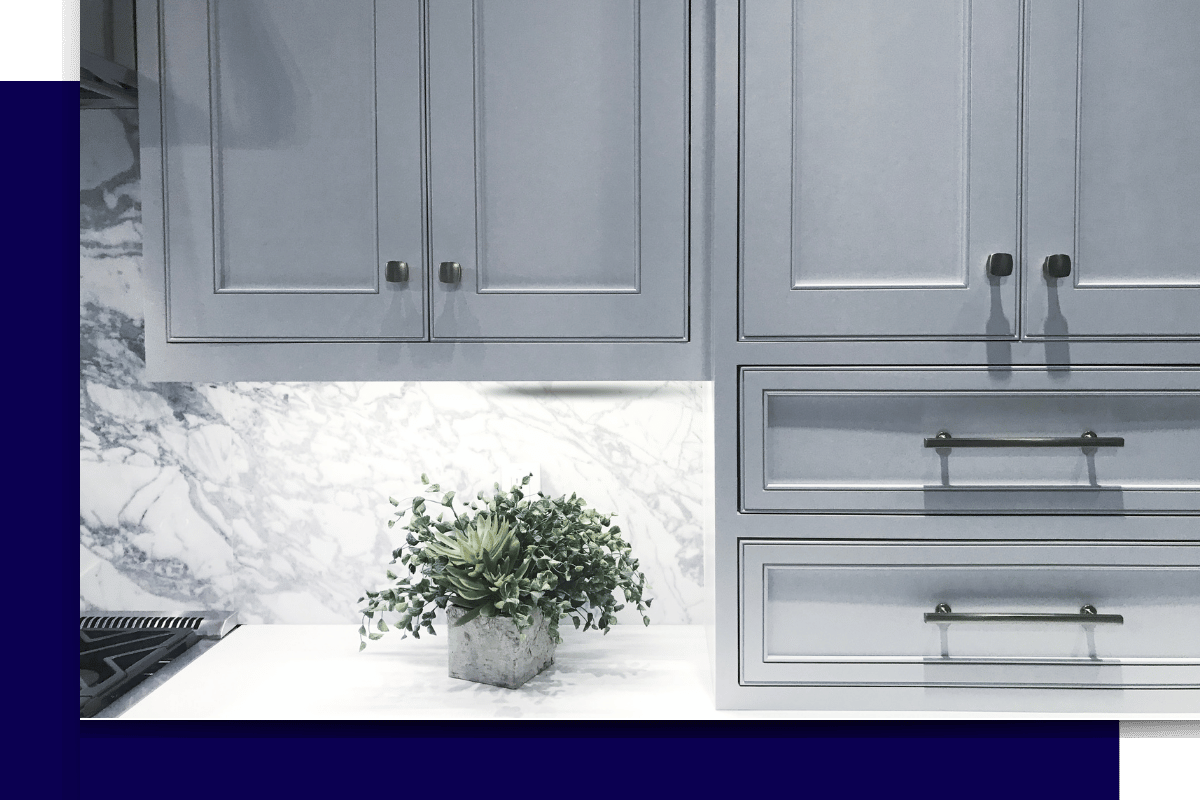
A true Shaker cabinet is defined primarily by its door profile. The classic shaker door uses a five-piece construction with a flat center panel set inside a square-edged frame.
The two vertical frame pieces are called stiles. The two horizontal pieces are rails. Together, they surround the recessed panel and create the simple rectangular profile associated with Shaker cabinetry. Traditional versions avoid carved mouldings, elaborate arches, raised panels, and ornamental details.
This minimalist design developed from a broader philosophy that valued usefulness, honest craftsmanship, and restraint. Historical Shaker furniture was designed around function rather than unnecessary decoration, which helps explain why the style still feels relevant in modern homes.
The Anatomy of a Shaker Door
Although a finished door may look simple, its proportions require careful consideration.
A standard Shaker door commonly includes:
- Two vertical stiles
- Two horizontal rails
- One flat center panel
- Square or subtly eased inside edges
- Clean outer edges without decorative moulding
Traditional rails and stiles may measure approximately 2¼ to 3½ inches wide, although proportions vary between cabinet lines and custom designs. A narrower frame creates a lighter, more contemporary appearance. A wider frame gives the kitchen a stronger, more traditional presence.
The depth of the recessed area also affects the final character. A deeper step produces more shadow and visual definition. A shallow recess appears softer and can bring the door closer to a modern slab style.
How These Cabinets Are Constructed
In traditional five-piece doors, the rails and stiles are joined to create a stable frame, while the panel fits within grooves along the interior edges. These cabinets are constructed this way partly because the panel and surrounding frame may respond differently to changes in humidity.
Solid wood naturally expands and contracts as indoor conditions change. Allowing controlled movement can help protect the door from cracking or distortion. Painted doors may also be made from medium-density fibreboard because it offers a smooth surface and dimensional stability, particularly when a uniform painted finish is the goal.
The door style should not be confused with the cabinet box. Shaker doors can be installed on face-framed, frameless, inset, full-overlay, or partial-overlay cabinetry. The door tells you what the front looks like. It does not tell you how the entire cabinet is built.
Why Are Shaker Cabinets So Popular?
Shaker cabinets remain popular because they occupy the useful middle ground between ornate traditional doors and completely flat contemporary doors.
They provide enough detail to give a kitchen depth, but not so much detail that the room becomes visually crowded. This makes them especially useful in open-plan homes, where the kitchen must relate naturally to dining and living areas.
They Adapt to Different Kitchen Styles
A Shaker kitchen can change character through relatively small design decisions.
For a traditional kitchen, Shaker doors can be paired with warm wood finishes, crown moulding, detailed hardware, natural stone countertops, and inset cabinet construction.
For a transitional kitchen, homeowners might choose painted cabinetry, simple hardware, quartz countertops, and a balanced combination of classic and current elements.
For contemporary shaker kitchens, narrower rails, full-overlay doors, minimal hardware, low-sheen finishes, and clean architectural lines create a more streamlined appearance.
This flexibility is one reason Shaker cabinetry continues to work in kitchens with very different architecture and personalities.
They Provide a Timeless Foundation
Cabinetry is one of the largest visual elements in a kitchen. It is also more expensive and disruptive to replace than wall paint, lighting, bar stools, or decorative accessories.
A restrained cabinet style allows those easier-to-change details to evolve over time. Hardware can move from black to brass. Walls can be repainted. Countertops and backsplashes can introduce stronger colours or patterns. The cabinet doors can remain visually relevant through each update.
That does not mean every white Shaker kitchen automatically looks timeless. A highly familiar combination of bright white cabinetry, grey flooring, subway tile, and dark hardware may reflect a particular remodeling period. The Shaker door itself is versatile, but the complete material palette determines whether the room feels personal or predictable.
They Balance Beauty With Everyday Function
Kitchens must withstand moisture, cooking residue, repeated opening, accidental impacts, and daily cleaning. Shaker cabinets suit these demands because their surfaces are less intricate than heavily moulded doors.
The frame still creates edges where dust or grease can collect, so they are not as effortless to wipe as completely flat cabinet doors. However, they generally require less detailed cleaning than ornate raised-panel cabinetry.
For most households, a soft microfiber cloth and a mild, cabinet-safe cleaning solution are sufficient. Excess water should not be left around joints, edges, or unfinished areas.
Choosing the Right Shaker Style for Your Kitchen
The most successful Shaker kitchens are not designed by selecting a door sample in isolation. The door must be considered alongside the room’s scale, lighting, architecture, hardware, storage needs, and surrounding finishes.
Standard Shaker vs. Slim Shaker
Standard Shaker doors have relatively substantial rails and stiles. They feel grounded and familiar, making them appropriate for traditional and transitional kitchens.
Slim Shaker doors use a narrower frame around a larger center panel. This variation maintains the recognizable recessed-panel structure while creating a lighter contemporary appearance.
Slim doors can be especially effective in compact kitchens because the larger central panel reduces visual busyness. However, extremely narrow framing requires appropriate materials and sound construction. Proportions that look elegant on a sample may not suit every door size, particularly very narrow cabinets or wide drawer fronts.
Painted vs. Natural Wood Shaker Cabinets
Painted cabinetry gives Shaker doors a smooth, consistent appearance. White shaker cabinets can brighten a kitchen and coordinate easily with changing finishes, but white is only one option.
Cream, mushroom, taupe, muted blue, olive, and soft green can add warmth without overwhelming the room. Dark navy or charcoal cabinetry may create dramatic contrast in a kitchen with sufficient natural and artificial light.
Natural wood brings visible grain and variation into the design. Maple offers a finer, quieter grain, while white oak can add texture and warmth. Stained wood Shaker cabinets often feel more layered than a completely painted kitchen, especially when paired with stone countertops and simple hardware.
A mixed design can also work well. For example, painted perimeter cabinets may be combined with a natural wood island. The repeated shaker style keeps the kitchen cohesive while the material contrast adds depth.
Inset, Full-Overlay, and Partial-Overlay Doors
The same Shaker door can look noticeably different depending on how it sits on the cabinet.
| Door application | Appearance | Best suited for |
|---|---|---|
| Inset | Doors sit flush inside the cabinet frame | Tailored, traditional, or high-detail kitchens |
| Full overlay | Doors cover most of the cabinet front | Clean transitional or contemporary kitchens |
| Partial overlay | More of the face frame remains visible | Practical, familiar, traditionally framed kitchens |
Inset cabinetry creates precise, even reveals around the doors and drawers. It can feel more furniture-like but requires highly accurate cabinet construction and installation.
Full-overlay shaker doors create a more continuous surface with smaller gaps between fronts. This is often the preferred approach for a contemporary kitchen.
What Should You Check Before Buying Shaker Cabinets?
The phrase “Shaker cabinet” describes an appearance, not a guaranteed level of quality. Two kitchens can use similar-looking doors but perform very differently after years of use.
Look Beyond the Door Style
Ask what materials are used for the cabinet boxes, backs, shelves, drawer boxes, and doors. Also examine the hinges, drawer glides, finish system, joinery, and installation method.
Important questions include:
- Are the cabinet boxes plywood, particleboard, MDF, or another engineered material?
- Are the shelves thick enough for their expected span and load?
- Are drawer boxes securely joined and properly aligned?
- Are hinges and drawer glides adjustable?
- Is the finish appropriate for a high-use kitchen environment?
- How are exposed ends, fillers, panels, and mouldings finished?
- Who measures and installs the cabinetry?
A door sample cannot answer these questions. The durability of a kitchen depends on the complete cabinet system.
Consider the Whole Room Before Choosing White
White Shaker cabinets can make a kitchen feel open, but white also reflects surrounding undertones. A cool white may appear blue beside warm flooring. A creamy white can look yellow against a crisp white countertop.
Samples should be viewed in the actual kitchen at different times of day. Morning daylight, evening light, and under-cabinet lighting can all change how colours appear.
The same care should be given to hardware scale, countertop movement, backsplash texture, and flooring. Shaker cabinetry creates a calm foundation, but every surrounding choice affects the final result.
Know When Custom Design Makes a Difference
Professional design becomes particularly valuable when a kitchen includes uneven walls, unusual ceiling heights, appliance panels, inset doors, narrow fillers, integrated storage, or a challenging traffic pattern.
Royal Cabinets works with homeowners, builders, architects, designers, and contractors to create custom, semi-custom, and modular kitchen cabinetry throughout Western Washington. With more than 60 years of cabinet-making experience, the team can help coordinate the Shaker door profile with the right construction, layout, finish, storage features, and installation details for the home.
Common Shaker Kitchen Mistakes to Avoid
The most common problem is not choosing Shaker cabinets. It is making every other decision by default.
Treating Every Shaker Door as Identical
Frame width, panel depth, inside-edge profile, material, sheen, and overlay all change the appearance. Review a full-size door sample rather than relying only on a small colour chip or online image.
Using Too Many Competing Details
A simple door allows other materials to stand out, but the room still needs hierarchy. Strong countertop veining, patterned tile, contrasting cabinetry, decorative lighting, and bold hardware can compete when all are used at once.
Choose one or two dominant features and allow the remaining elements to support them.
Ignoring Drawer-Front Proportions
A five-piece Shaker front may look compressed on a shallow drawer. Some kitchen designs use slab fronts on top drawers and Shaker fronts below. Others adjust the rail widths to preserve balance. This detail should be resolved during design rather than after manufacturing.
Choosing Style Without Evaluating Construction
Beautiful doors cannot compensate for poorly aligned cabinets, weak drawer hardware, unsuitable materials, or an inconsistent finish. Cabinet construction and professional installation determine how the kitchen feels in daily use.
Frequently Asked Questions About Shaker Cabinets
Are Shaker cabinets still in style?
Yes. Shaker cabinets remain relevant because their simple proportions adapt to traditional, transitional, and contemporary kitchens.
Current designs often move beyond the familiar bright-white version by using slim frames, natural wood, warm neutrals, low-sheen finishes, and more personalized material combinations.
What is the difference between Shaker and flat-panel cabinets?
Shaker doors have a frame surrounding a recessed center panel, while flat-panel or slab doors have one smooth, uninterrupted front.
Shaker cabinetry provides more visual depth and traditional reference. Slab doors create a cleaner, more minimal appearance and are slightly easier to wipe down.
Are Shaker cabinets more expensive?
Not necessarily. Price depends more on the material, cabinet box, finish, hardware, customization, and installation than on the Shaker style itself.
A stock Shaker kitchen may cost less than custom slab cabinetry. A fully custom inset Shaker kitchen made from premium wood may cost considerably more than either option.
Are Shaker cabinets easy to clean?
Yes, compared with ornate cabinet doors. Their flat panel and simple frame contain fewer grooves and decorative details.
Dust and cooking residue can still settle along the inner frame edge. Regular wiping prevents buildup and is easier than waiting until grease has hardened.
What colours work best for Shaker kitchens?
White, cream, taupe, muted green, navy, and natural wood all work well with Shaker kitchens.
The best choice depends on the room’s daylight, flooring, countertops, backsplash, surrounding architecture, and desired atmosphere. Always review physical samples inside the actual space.
What is the difference between Shaker and raised-panel cabinets?
Shaker doors use a flat recessed panel with clean, square framing. Raised-panel doors have a central panel that projects forward and may include curved edges, mouldings, or decorative profiles.
Shaker doors generally feel simpler and more adaptable. Raised-panel doors usually create a more formal or traditional appearance.
Design Shaker Cabinetry Around Your Home
A well-designed Shaker kitchen should feel simple, but never generic. The right door proportions, materials, layout, finish, storage features, and installation can turn a familiar cabinet style into something distinctly suited to your home.
Call Royal Cabinets to schedule a consultation and begin designing kitchen cabinetry that combines enduring style, practical storage, and quality craftsmanship.
[PHONE]: (253) 843-7682